How AI Smart Scheduling Predicts the Perfect Appointment Time
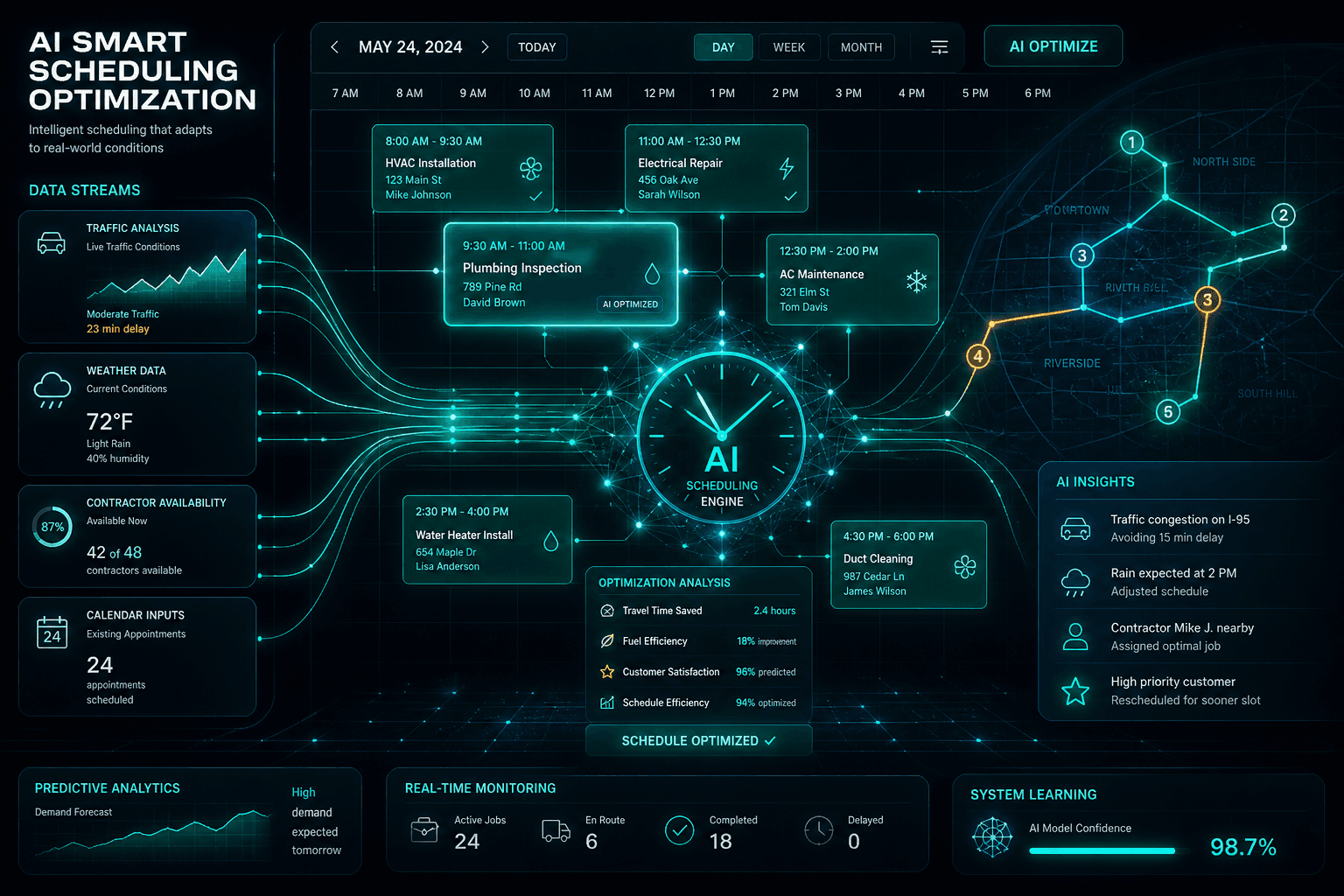
The classic contractor experience: 'We'll be there between 8 AM and noon.' You block half your day, rearrange your schedule, and wait. Maybe they show up at 11:45. Maybe they call at 11:30 to say they're running late. AI-powered scheduling is ending this frustration by predicting tighter windows that actually hold.
The data behind smart scheduling
AI scheduling systems analyze far more than just 'is the contractor free?' They process:
- Historical job durations for similar work
- Real-time and predicted traffic conditions along the route
- Weather forecasts that might affect outdoor or travel-dependent jobs
- The contractor's track record for on-time arrivals
- Your stated preferences for timing and flexibility
From four hours to two
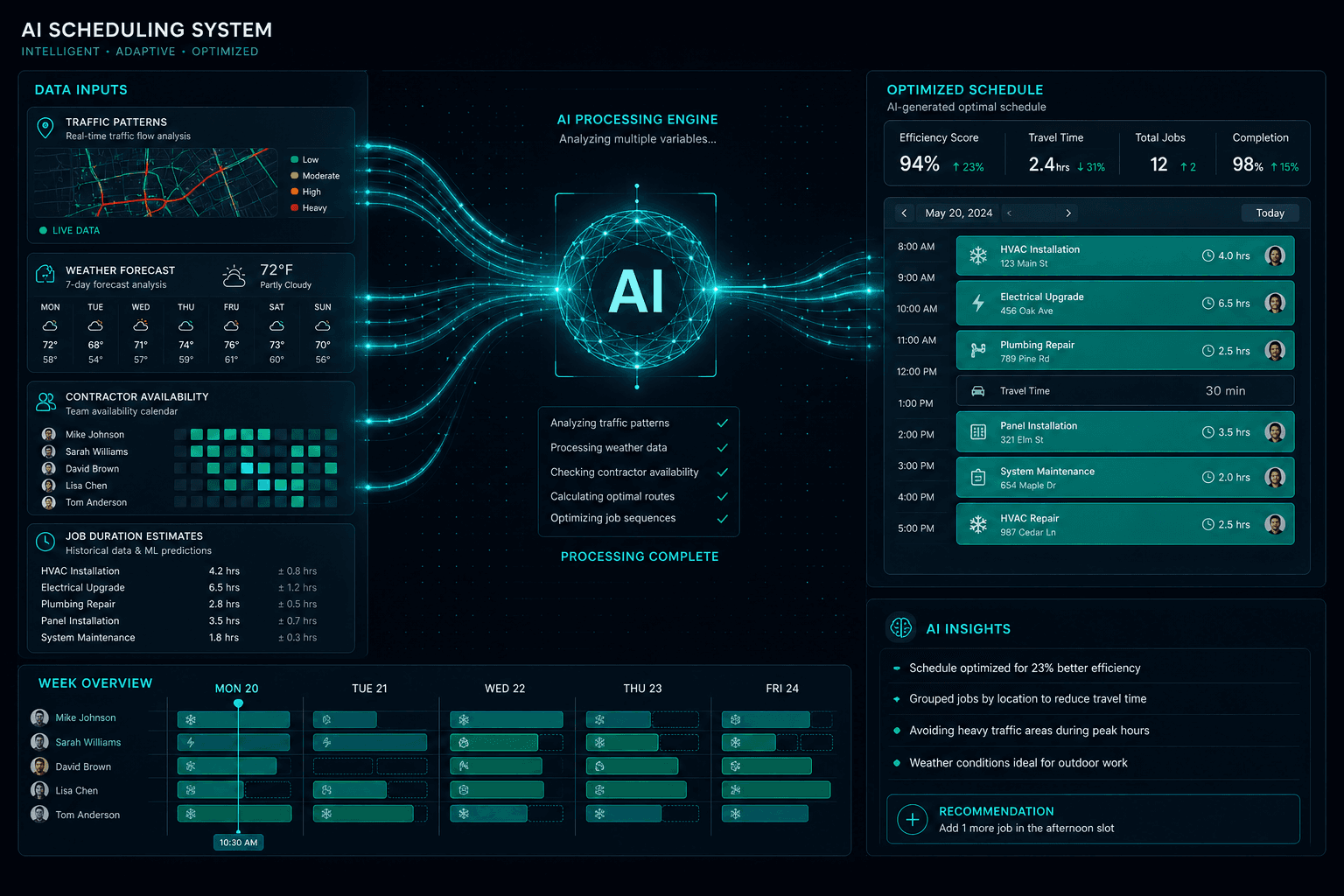
Traditional scheduling systems are conservative because they account for worst-case scenarios at every step. AI systems are probabilistic — they calculate the likely range, not just the possible range. When the data suggests a 90% chance of arrival between 9 and 11 AM, that's the window you see. Exceptions happen, but they're communicated proactively, not discovered when you call to ask where your pro is.
Adapting in real time
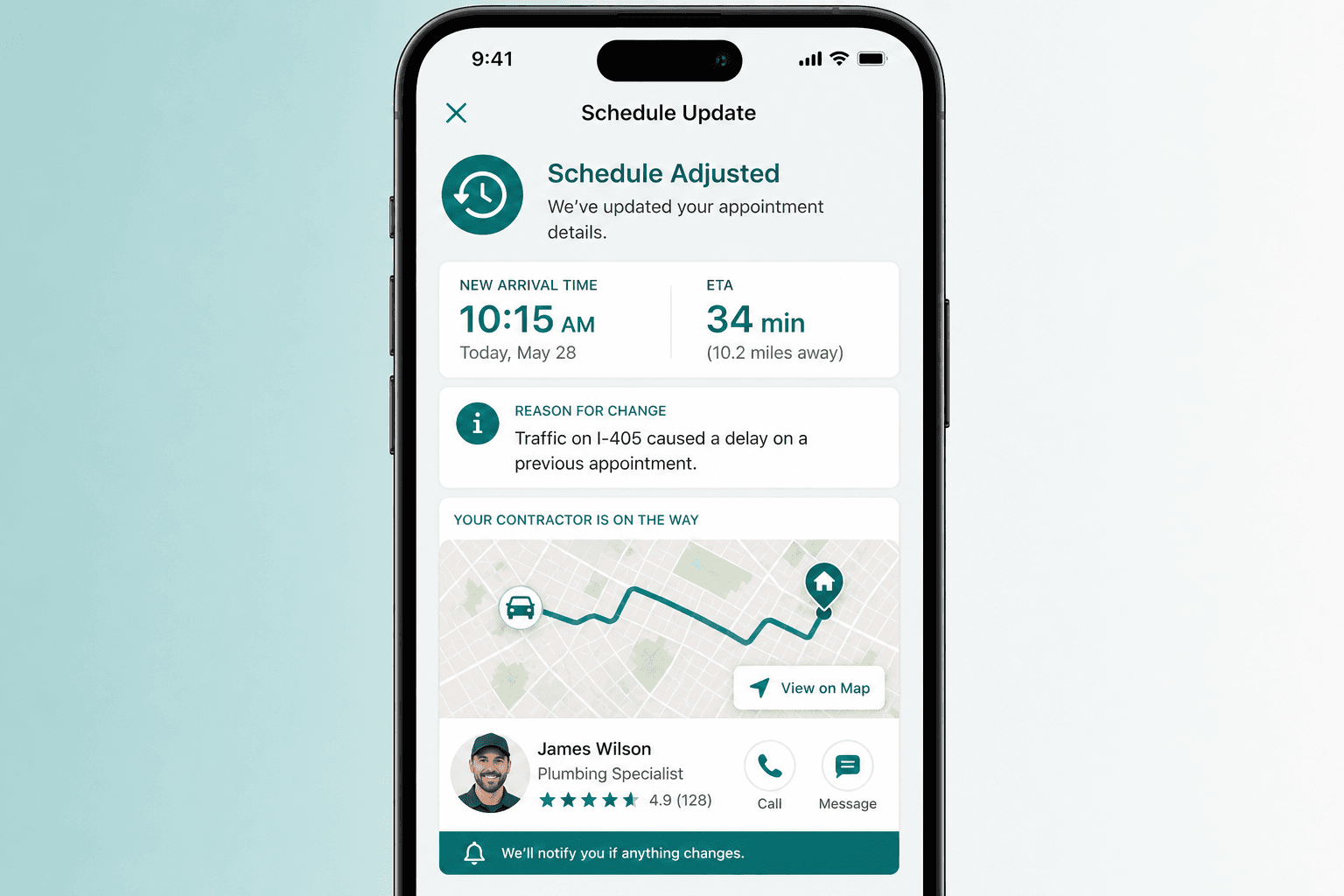
A truly smart scheduling system doesn't just predict — it adapts. If a morning job runs long, the system recalculates afternoon appointments and notifies affected homeowners before they're left wondering. If traffic clears early, you might get a 'your pro will arrive sooner than expected' alert. The goal is to keep you informed without requiring you to constantly check status.
Waiting around for a contractor is one of the oldest frustrations in home ownership. AI scheduling won't make every appointment perfect, but it's making 'sometime this morning' feel like a relic of the past.